
Blanket rezoning. A housing policy so contentious, the Mayor of Calgary likened it to the Carbon tax.
Citywide rezoning was approved in 2024 only to be repealed in the spring of 2026.
Residents’ opposition to the policy, which cleared the way for higher housing density in the majority of the city’s residential areas, forced the city to backtrack on the policy change.
“I am, was, and will always be against the concept of blanket rezoning,” said a Calgary woman at city hall’s public hearing into the matter last spring.
“I see the repeal of citywide rezoning as an unnecessary nuclear option against a policy that’s doing its job,” said another, hoping to convince members of city council the policy was worth saving.
“I think we all know that the politics around blanket rezoning has reached such a fervour,” said another, acknowledging the elephant in the room. “The only available option is to scrap it.”
Blanket rezoning saw two public hearings at City Hall — one to implement it, the other to scrap it. Each time, hundreds of Calgarians spoke, sharing hope for the future and concern with the direction the city was heading.
No matter the viewpoint, those who spoke agreed: Calgary is growing, and housing is needed. The disagreement is how to get homes built.
Blanket rezoning — Contentious from the start
Three years, 300,000 people. And we were supposed to figure out a way to do all that with the same policies on the ground that we had in the 1950s? It was never gonna happen. — former Ward 8 councillor Courtney Walcott.
In 2023, city hall approved an ambitious housing strategy with a goal of ensuring all Calgarians would have an affordable place to call home.
It came at a dire time; Calgary’s population was exploding.
Hoards of people had moved to Alberta, seeking opportunity and affordability. Many chose to settle in Calgary, putting the city’s reputation of being an affordable place to live at risk.
“They’re leaving Toronto, they’re leaving Vancouver. They’re trying to go to wherever is affordable, and there’s jobs,” explained former Ward 8 City Councillor Courtney Walcott, a strong supporter of blanket rezoning.
“And so they rushed to Calgary. Three years, 300,000 people. And we were supposed to figure out a way to do all that with the same policies on the ground that we had in the 1950s? It was never gonna happen.”
Blanket rezoning was just one of the ways city hall hoped to alleviate pressure on the housing market, switching the default residential zoning to R-CG. The change allowed for more than a single-family home to be built on a lot, which had been the case for two-thirds of the city. An adjustment was also made to the R-CG zoning to allow a secondary and basement suite.
The opposition was loud. Many Calgarians, mainly homeowners, voiced concerns of traffic congestion, parking issues, and garbage bins cluttering back alleys. But the voices of low-income Calgarians and renters, and the ability to cut red tape to build housing, led council, led by then-Mayor Jyoti Gondek, to approve rezoning.
Blanket rezoning’s approval unleashed development, and the wrath of Calgarians who felt their voices were silenced.
Change at city hall brings repeal of rezoning
In October 2025, change at city hall brought hope to those against the bylaw with a new mayor with a plan to “repeal and replace,” and a slate of fresh councillors, the majority of whom had promised blanket rezoning would go.
In early 2026, that promise was kept by a 12-3 vote.
“I’m ecstatic about council’s decision to move forward with a new plan,” said Ward 10 councillor Andre Chabot, following the repeal.
But those opposed to its removal grew worried that without a concrete plan, the momentum and certainty blanket rezoning brought to the housing market could slip away.
“I believe in good governance. This wasn’t good governance,” said Ward 7 Councillor Myke Atkinson. “You don’t repeal and figure something out later.”
Calgarians caught in the middle
Chip Abaco’s 1940s bungalow sits on a quiet street along the Bow River in the community of Inglewood.
“I actually first saw this house when I was in university,” said Abaco.
“I walked by in my third year with a friend. We walked all the way from downtown, and we walked all the way down past here, and I saw this street, and I told myself that one day I’ll live here.”
Inglewood is Calgary’s oldest community, known for its heritage and charm, something Abaco, like many Calgarians, worried would be lost through blanket rezoning. While he was initially against the zoning change, once more development started to pop up, Abaco says the writing was on the wall.
“Cost of living went up, our mortgage rates went up, and we saw development starting to go up everywhere. We saw garage suites go up all over the place in Inglewood,” he said. “So we figured that this was the way to go. I didn’t really overthink it because it seemed like the universe was leading us in that direction. Go with the flow at that point.”
He and his wife decided to add a basement suite and another in the garage, which was designed for full accessibility. He spoke with neighbours and addressed their concerns about privacy and shadows. His design was complete with a plan to include three parking spots at the back of his lot.
“We used all the incentive programs we could from the city. For the renovations, we did the Canada Greener Homes loan, and the CEIP thing as well … the City Energy Improvement Program,” Abaco said.
“We got solar panels and a heat pump with that. We did everything we could to take advantage of all the incentives the city was providing, and then all of a sudden it’s a 180-degree turn.”
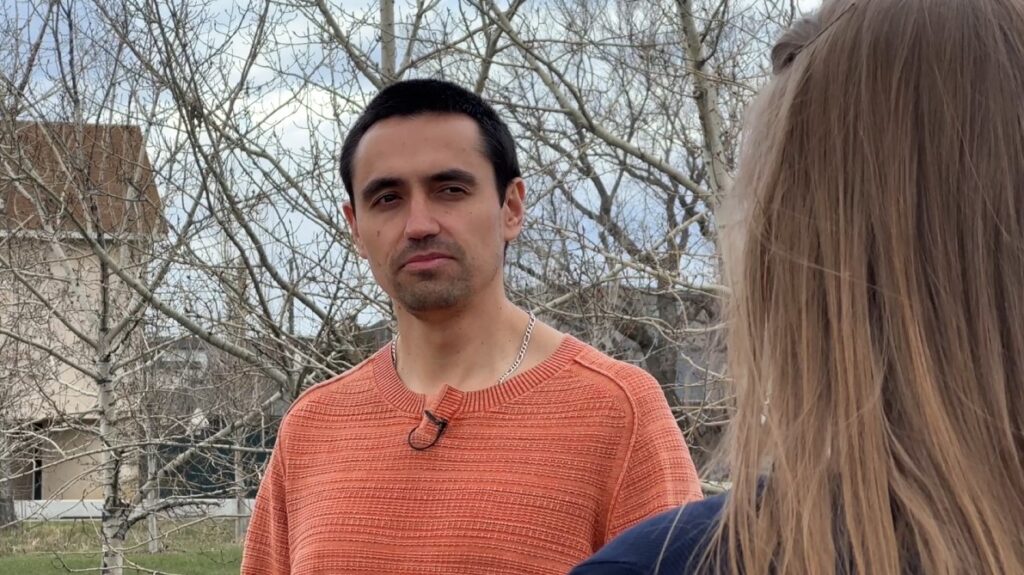
The development permit for Abaco’s backyard suite hadn’t yet been approved when he received notice from the city that there would be a public hearing on repealing blanket rezoning. Council’s proposal planned to revert the bylaw to its original state, meaning he could build either a secondary suite or backyard suite, but not both.
“For me, the real concern came when I read that they’re trying to get rid of the ability to do both, because that directly impacts me. I’m caught up in the middle of the process, and I’ve already put in a bunch of investments in being able to do both,” he said.
“I’ve done a bunch of the underground utility work already for the garage suite. And that’s all sunk costs.”
He says the uncertainty was terrifying. He and his wife had dipped into their savings to share their home and go along with what they thought the city was trying to incentivize.
But it wasn’t finished by the time the repeal rolled around.
Iteration after iteration, his application remained unapproved as he and the city worked together to find a design that was up to code. In the process, he had to scrap plans for a fully accessible unit because of size constraints on his property. It was a compromise he was willing to make if it meant his backyard suite would still be possible.
After he received notice that a bylaw repeal was on the horizon, he says attempts to clarify the status of his project were unsuccessful.
“My file manager also didn’t have any insight for me. He didn’t know whether or not my development permit could be approved given the rezoning,” he said.
“There was a lot of uncertainty even within city staff, and that’s when I really got worried. That’s when I made the decision to go and speak at city council because nobody had any answers for me.”
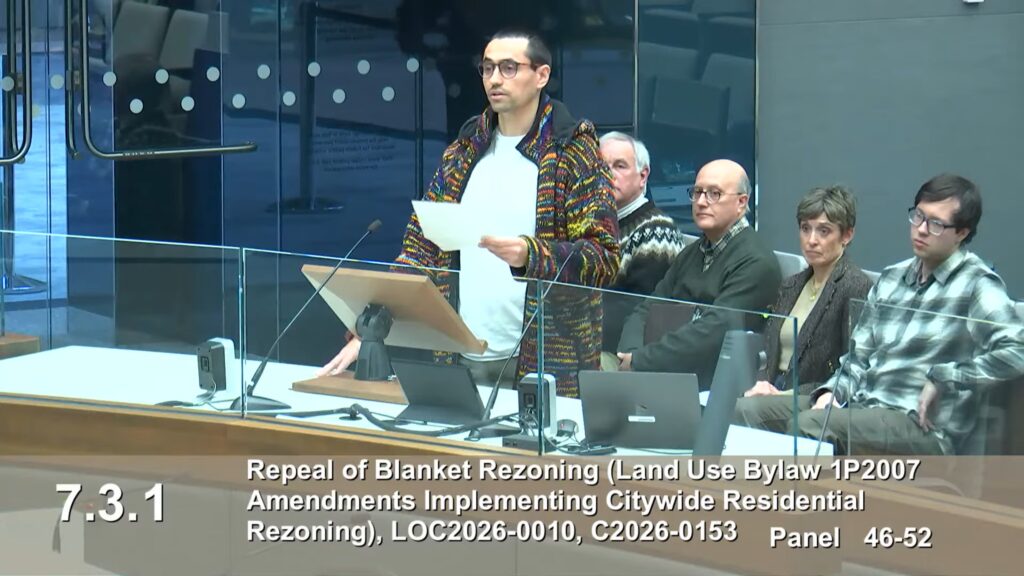
“Hello,” Abaco said in council chambers, taking a deep breath. “I’d like to share my experience with blanket rezoning since this whole thing started.”
“Over six months, $10,000, and four design iterations later, we still don’t have a development permit approval,” he explained during the public hearing. “But I do have a letter from you guys, saying you’re trying to unwind the whole thing.”
Both his area councillor, Harrison Clark, and a member of administration ensured he didn’t leave city hall that day without reassurance that if blanket rezoning was rescinded, his project could still go through, despite not complying with any existing zoning. He said the city told him he’s one of a very small handful of Calgarians caught in the middle.
“I understand the concerns that Calgarians have about being able to put up anything you want, right? And totally, I agree. The blanket rezoning doesn’t make sense from that perspective. But there were things that were very beneficial as part of blanket rezoning, with the ability to do both suites,” Abaco said. “I think that was a good thing.
“I understand that you were elected as councillors to fulfil your promises to Calgarians, that you ran on as election platforms, but at the same time you have to make sure that you’re not causing collateral damage, you’re not causing uncertainty, confusion, and stress and sunk costs to other Calgarians.”
Abaco says he’s cautiously hopeful that his permit will go through and he and his wife will be able to finish adding a third suite to the property. Sharing in the privilege, he says, of living under the biggest tree on the best street of the best community of a city that he loves.
“It’s not just developers that’re reacting to the bylaw changes and rezoning changes, right? It’s regular citizens too.”
Blanket rezoning a wedge issue in 2025 election
Calgary’s October 2025 civic election saw candidates take differing sides on blanket rezoning. Opponents of blanket rezoning won in many wards and in the mayor’s seat.
Ward 1 Councillor Kim Tyers, who campaigned on a platform of repealing rezoning, says the issue came up immediately.
“Some of my areas like Bowness and Varsity were affected pretty dramatically by the blanket rezoning policy that was passed,” she said.
“They’d invite me to town halls to where developers were presenting their projects, and there was like 300 people in a room. It was very tense, and the community was not on board with what they wanted to do.”
Data from the City of Calgary says 4500 units were approved because of blanket rezoning. Most of the development was in established areas, a fear of many who opposed the bylaw in 2024.
With a majority of council elected on a platform of repealing rezoning, the public hearing evolved from whether or not a repeal should happen, to many Calgarians sharing what they would like to see instead.
“We would have experts in their fields that were like ‘hey if you guys are interested, ask me more about my suggestions,” said Tyers.
“From real estate boards, from community associations, and people that know this stuff. We did actually ask a lot of questions about what comes next because we’re not just gonna repeal it and leave it; we want to make sure that the community voice is included.”
Following the repeal, members of council threw their support behind Local Area Plans (LAPs). It’s a more community-concentrated way of planning, first introduced in 2021. It was what numerous speakers at the public hearing had been asking for, where community character can be preserved and celebrated.
Eight LAPs have been approved with three more on the books. City council is looking to expand that, but it won’t be a speedy replacement.
A notice of motion from council members looking to speed up LAPs reveals that they take two and a half to three years to complete, and that the ‘cumulative time to complete outstanding areas at the current pace would be 15 to 20 years.’
It’s a timeline Tyers hopes to be able to cut down, something developers say is dire.
“For council right now, the biggest thing they can do is implement the replacement really quickly,” said Shameer Gaidar, Chair of the Calgary Inner City Builders Association, which represents more than 200 companies.

His presentation to council during the public hearing stretched on for more than an hour as councillors peppered him with questions on what he’d like to see for a path forward.
“Blanket rezoning wasn’t to build everything everywhere,” he explained. “It was the same processes; all it did was eliminate six months on the front end.”
Blanket rezoning had eliminated the need for developers to go through a Land Use Change — saving time and money, and giving developers a level of certainty that the industry responded to immediately.
Now, Gaidar says, developers responded to the repeal of rezoning by hitting the brakes.
“We’re losing investment dollars, but with investment dollars, who cares about that? Some people will say it doesn’t matter. But what comes with investment dollars? Jobs. That’s a big thing. You’re seeing trades leave, move to different jurisdictions,” he said.
“That’s not what we want. That means affordability is starting to erode. Rents, you’re gonna see go up, house prices are gonna go up.”
Gaidar says he wasn’t necessarily in favour of blanket rezoning itself, that his priority is speeding up the process.
“A property sitting vacant costs $500 a day to maintain. That $500 a day at six months is $90,000. You know who paid the $90,000?” he explained.
“There were two consequences for it. Either A — a project didn’t go forward because it was not viable, because the $90,000 would make the difference between it going and not going. Or B — that number got pushed onto the average Calgarian.”
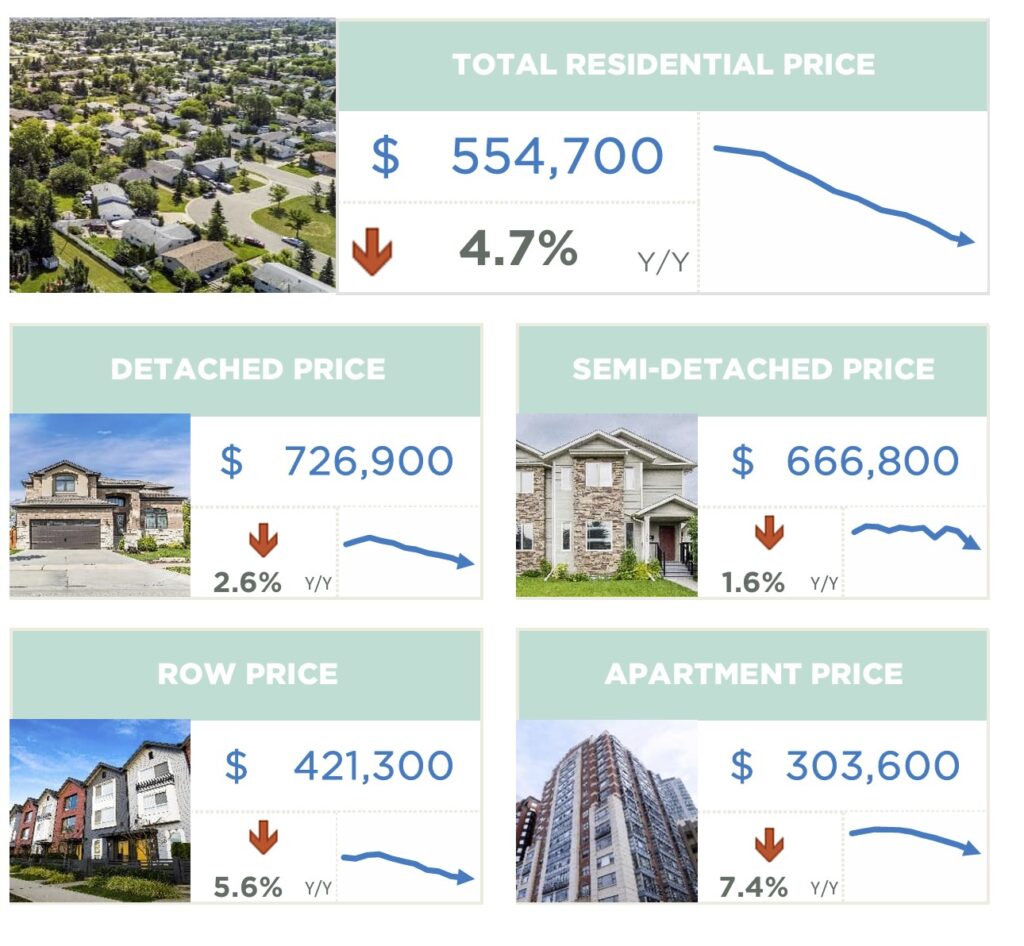
By the end of 2025, the average price for housing across all unit types had decreased by nearly five per cent year over year. Row homes and apartments saw the steepest decline.
“Because the amount of supply that came on, house prices didn’t go up as crazy as it did in other cities,” Gaidar explained.
“But here’s the thing: When we lose affordability, it is not easy to get back. It is not easy to get more housing done.
“It starts, and it’s a big wheel, in a snowball, and if you stop it, you can’t start it again.”
Rezoning’s ripple effect
While critics of blanket rezoning highlighted concerns about how busy their communities might become and how things might change, those in support spoke of a different story. From those who can barely afford rent to those who have all but given up on their dreams of owning a home.
But while demand lingers, the repeal of blanket rezoning doesn’t mean Calgary has taken its foot off the gas entirely. Rezoning was just one of 98 strategies in the city’s housing plan. Other measures see the city working directly with housing providers, including the Siksika Off-Reserve Affordable Housing Project (SORAH).
“I tend to not get dragged down or bogged down in the ‘bureaucrazy’ of housing. Ultimately, I want to be able to hand keys over to people. Every set of keys delivered is a promise kept,” said Max Lloyd, President of SORAH.
“One thousand homes could be delivered tomorrow, but there’s still a need for another thousand on top of that.”
He says the city’s collaboration has been a game changer.
The organization recently received land in the community of Erin Woods to turn into sixty townhomes for members of the Siksika Nation. The rental rates for the units will be determined using a formula based on market rates. Meaning that while rezoning didn’t have a direct impact on the ability to get his project built, any increase in Calgary’s average prices will see residents of the units paying more.
A city survey in the Fall of 2025 found that 92 per cent of respondents feel the housing market is too expensive.
“I cannot find a cheaper home or place to live in, so I have to put up with a bad living situation,” shared a Calgarian during the public hearing.
“I guess if moving to Edmonton means that I will be able to afford a home, then I will move to Edmonton,” joked another. “I don’t want to move to Edmonton.”
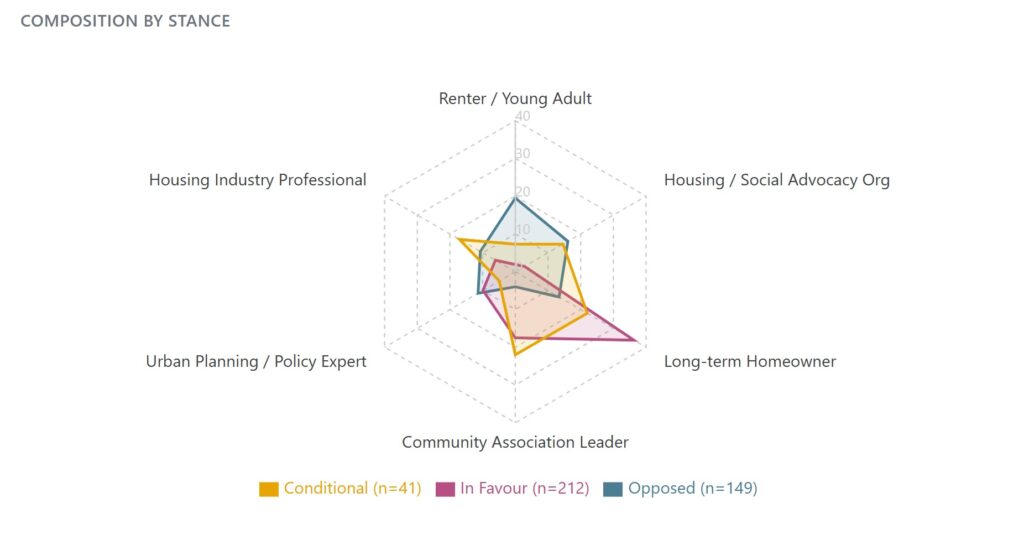
Nearly three-quarters of speakers at the public hearing wanted blanket rezoning gone. The large majority of those opposed identified themselves as long-term homeowners, according to data from Calgary software agency Pixeltree.
“I was a bit frustrated after the last public hearing that we weren’t able to compile all the data that we needed to really understand where speakers were coming from and what their arguments were,” said Serene Yew, CEO of Pixeltree, “I wanted to look at it and do a bit of a deeper dive and also present it in a way that readers could easily consume.”
Through her detailed analysis, Yew mapped the rezoning repeal public hearing submissions, analyzed where the attendees lived, and compared them with disparities in the city.
“We saw that the wealthier neighbourhoods had more submissions and more presenters, whereas the lower-income neighbourhoods … some of them had none at all,” he said.
“I found it fairly interesting that there were some communities that had absolutely no impact by RCG bring out the most opposition, whereas areas like Bowness actually have a lot of new developments, and they may have some valid criticisms there, but their submissions were somewhere in the middle.”
It’s a drawback that comes with public hearings.
“I know many people who care a lot about this issue but are unable to show up to the council meeting during the workweek at an undetermined time mid-day,” said a Calgarian during her submission on blanket rezoning.
“People being able to come here and speak at a pubic hearing, that’s challenging,” said Ward 11 councillor Rob Ward in response to the concern.
“That’s why I wasn’t here in 2024,” he said. “I had a full-time job. I couldn’t just hang out here all day.”
Yew says that for people to come to a public hearing, there is a high barrier to entry.
“You have to know that it’s happening. You need to have a level of education to understand what’s going on, you need to be able to take the time out of your day, you need to be able to speak English, or write in English and be able to present that argument,” said Yew.
“A lot of those people who are in need of housing wouldn’t have access to that.”
It’s that understanding that drove former city councillor Courtney Walcott to approve blanket rezoning in 2024, despite a majority of speakers at the time opposing it.
“Who are we here to serve? Our job is not to serve who shows up. Our job is to serve everyone in this city as a collective, as a community.”
Before the repeal of rezoning, housing prices and rents were decreasing. The city led the country in housing starts, beating out all other major cities also dealing with housing pressures.
“It worked. How sad is that, that even though it worked exactly how it was designed to work, people made so many excuses just so that we could then go back to the drawing board, pretend we’re gonna replace it and say ‘Oh it’s okay, we’ll do the same thing we did 10 years ago and somehow it’ll be different this time,’” Walcott said.
Despite his disappointment in the policy being reversed, the former councillor says he’s proud of how much housing was built during blanket rezoning.
“No matter what anybody says about zoning or housing or whatever, homes were built at record pace. Every home that was built is a family. Every home that was built that came from under the regulations that we changed, that’s a home that wasn’t able to be built before,” he said.
“The records that we were setting, the people we were welcoming from other parts of the country, that’s like, that’s beautiful. Like that’s, those are people who have a home. Who can be mad at that?”
There’s no doubt that housing is desperately needed. The path to get there isn’t clear, but the city is filled with thousands of residents who care enough about their community to research housing policy and demand more from their elected leaders.
As Calgary evolves and grows, blanket rezoning shows that Calgary’s age-old debate of sprawl versus density is far from over.